Wellbeing in Mercy College

In Mercy College, we know that the wellbeing of our students is critical to success in school and life. Wellbeing is an integral part of the school curriculum. Students’ wellbeing is present when the students realise their abilities, take care of their physical wellbeing, can cope with the normal stresses of life, and have a sense of purpose and belonging to the wider community. Wellbeing provides life-long advantages, improves students’ academic performance, integration and satisfaction.

Our priority is to create an environment where our students can flourish, as outlined in our mission statement.

In Mercy College we also believe that wellbeing is a balancing process between skills and resources, challenges and support. Our priority is to create an environment where our students can flourish, as outlined in our mission statement.

“which will enable students to achieve their maximum potential in a caring and nurturing environment”. 

Wellbeing in our school starts with the frontline staff and there is a commitment in Mercy College to promote the emotional and social wellbeing of all. It is our goal to create a mutually respectful atmosphere between all individuals involved within our school including management, teachers, staff members, students, parents, and visitors. We recognise the importance of students having one good adult role model in their lives and we endeavour to provide this within our school community.

What is Wellbeing?
What is Wellbeing?

The World Health Organisation (WHO) takes account of the multi-dimensional nature of Wellbeing and describes it as “when a person realises their potential, is resilient in dealing with the normal stresses of their life, takes care of their physical wellbeing and has a sense of purpose, connection and belonging to a wider community. It is a fluid way of being and needs nurturing throughout life”.

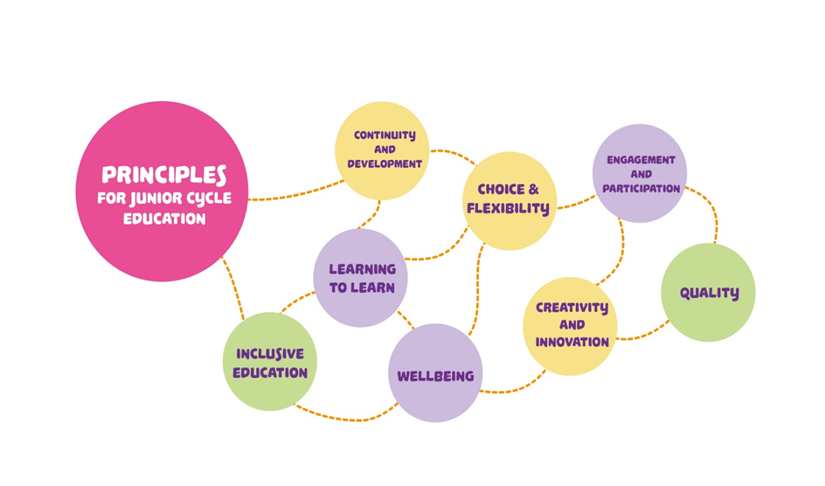
“Wellbeing” is one of the principles of Junior Cycle Education where:

“The student experience contributes directly to their physical, mental, emotional and social wellbeing and resilience. Learning takes place in a climate focused on collective wellbeing of school community and society.”
(Junior Cycle Wellbeing Guidelines, 2021, pg. 16)

Cultivating Wellbeing

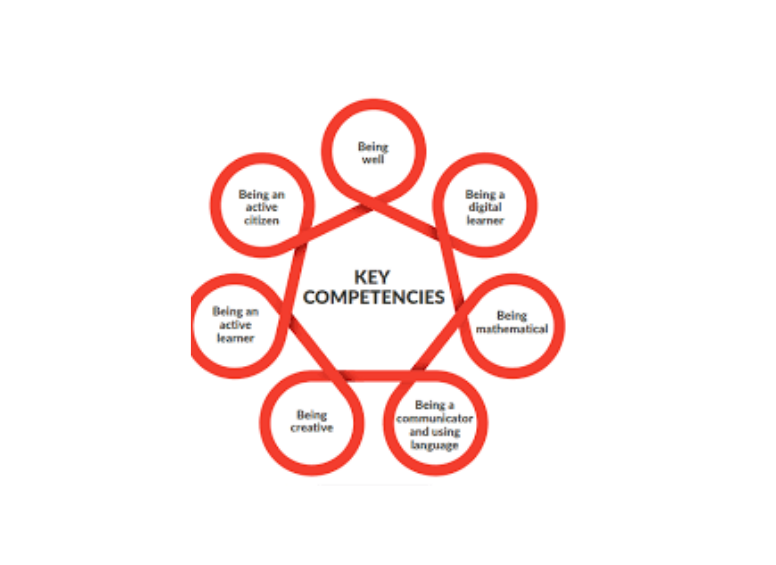
“Cultivating Wellbeing” is also one of the Key Competencies for Senior Cycle. The NCCA document on Key Competencies in Senior Cycle (pg.8) states that “Student wellbeing is present when students realise their abilities, take care of their physical wellbeing, can cope with the normal stresses of life, and feel a sense of purpose and belonging.”

In Mercy College, we focus on the holistic perspective, encompassing attributes to enable each individual to succeed on their chosen pathway through life.
The Wellbeing Programme

Whole School Approach

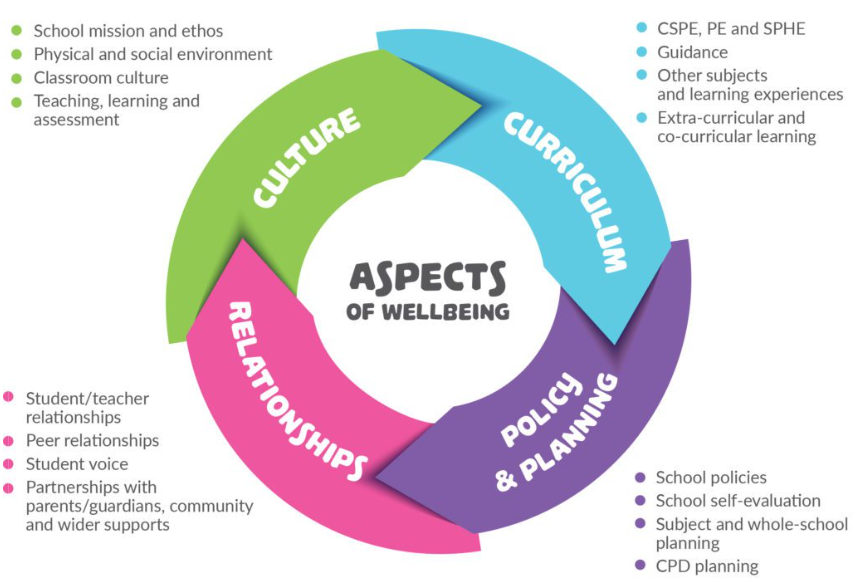
Mercy College recognises the important role it plays in promoting and ensuring the Wellbeing of our students and staff. There are four key aspects of wellbeing in schools as defined in the Junior Cycle Wellbeing Guidelines (NCCA, 2021). These incorporate school culture, relationships, policy and planning and the school curriculum. The focus on these four aspects of Wellbeing aims to establish a wellbeing programme that encompasses all members of our school community.  
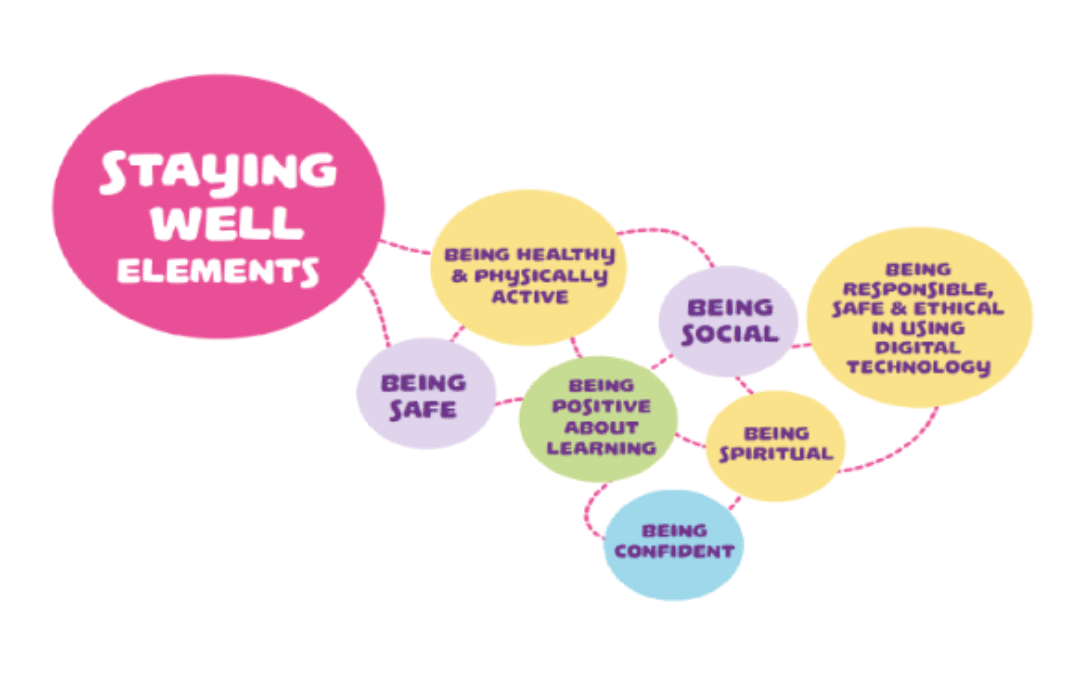
Wellbeing in Junior Cycle

Wellbeing (Staying Well) is one of the eight key skills underpinning the Junior Cycle Profile of Achievement.

(Elements of the Staying Well Key Skill for Junior Cycle Profile of Achievement)

Junior Cycle Wellbeing Guidelines, 2021
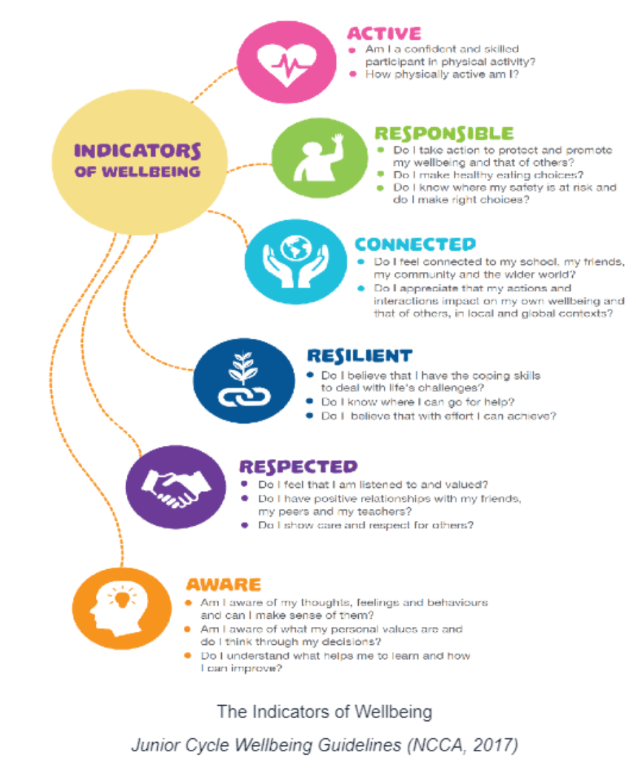
Wellbeing Indicators

A number of the twenty-four statements of learning (SOL) in Junior Cycle relate explicitly to student Wellbeing. 

Whole School Approach

Mercy College recognises the important role it plays in promoting and ensuring the Wellbeing of our students and staff. There are four key aspects of wellbeing in schools as defined in the Junior Cycle Wellbeing Guidelines (NCCA, 2021). These incorporate school culture, relationships, policy and planning and the school curriculum. The focus on these four aspects of Wellbeing aims to establish a wellbeing programme that encompasses all members of our school community.  

The evidence of these in daily student experience are considered the success criteria for this Wellbeing programme.

Wellbeing is a core part of the student experience in Mercy College. All subjects seek to foster the Wellbeing of students to develop young people who are connected, aware, resilient, responsible, respected and active. In particular, the following subjects and modules primarily focus on the wellbeing indicators indicated above:

  • Physical Education (PE)
  • Social, Personal and Health Education (SPHE)
  • Civic, Social and Political Education (CSPE)
Extra-curricular Activities

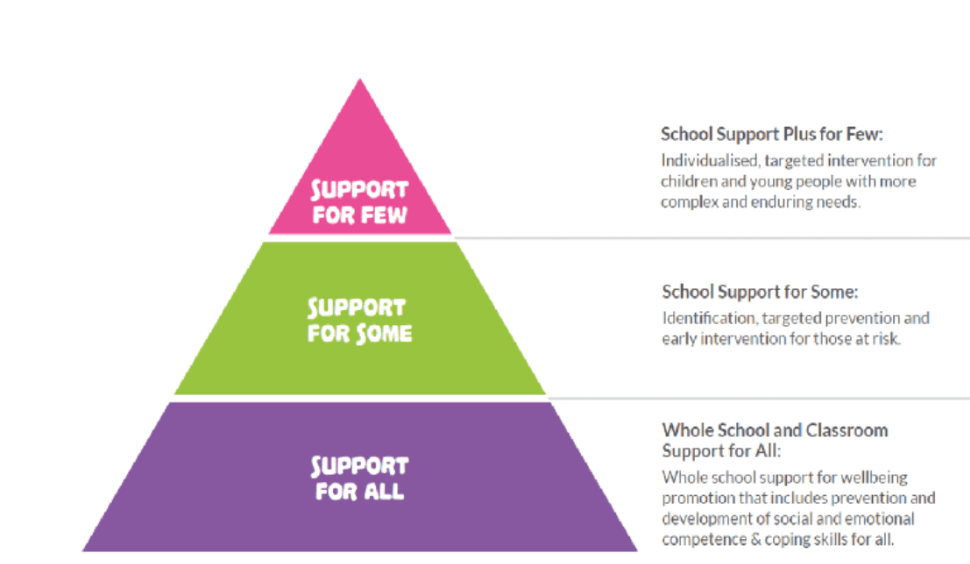
A vast range of extra-curricular activities aim to enhance the wellbeing of all students. The school has a number of wellbeing celebrations, initiatives and facilities which serve to enhance relationships and create a strong culture of wellbeing in the school. 

  • Wellbeing Garden, Outdoor Classroom & Outdoor Library 
  • Reflection Garden
  • Sports Days
  • Wellbeing Weeks – one at the beginning of the year to encourage friendship development and peer bonding and one nearer the end of the year to continue the important focus on wellness. Activities such as alpaca-walking and colour runs have been highlights in past years. 
  • Green Schools is an international education programme and award scheme that promotes long-term, whole-school action for the environment. Schools focus on issues such as waste and litter management, energy, water, sustainable transport, biodiversity and Global Citizenship. It fosters a strong sense of citizenship and leadership by the school community that spreads far outside the school into the wider community. The Green Schools Committee have a fully equipped polytunnel and outdoor classroom that supplies fresh herbs, fruit and vegetables to the Home Economics Department.
  • Irish Heart Foundation Award – this award recognises the school, the teachers, and the students for their efforts in promoting CPR awareness and training.
  • Belong To Quality Mark – this was 18-month process undertaken by Mercy College to develop and embed wellbeing and inclusion for LGBTQ+ students. The school was awarded the Quality Mark in 2025 and endeavours to update it every year.
  • Clubs & Societies – a vast range of clubs, sports and societies are available to Mercy College students during and after school. From Chess Club to Basketball to Baking Club, there is something for everyone. 
  • Wellbeing Notice Board
  • Annual Christmas Door/Corridor Competition
  • LIFT Programme – this is a leadership learning process which provides students with the foundation to become leaders in their own lives.
  • Guest Speakers – for example, Richard Hogan (teenage wellbeing), Jackie Fox (Coco’s Law), Marie Gleeson (resilience), Maureen Griffen (internet safety)
  • Phone Contract – 1st years 
  • Wellbeing Hub – during Mercy College’s open night, the Wellbeing Hub displays all the clubs and societies that the school has to offer 
  • Taster Days
  • Breakfast Club
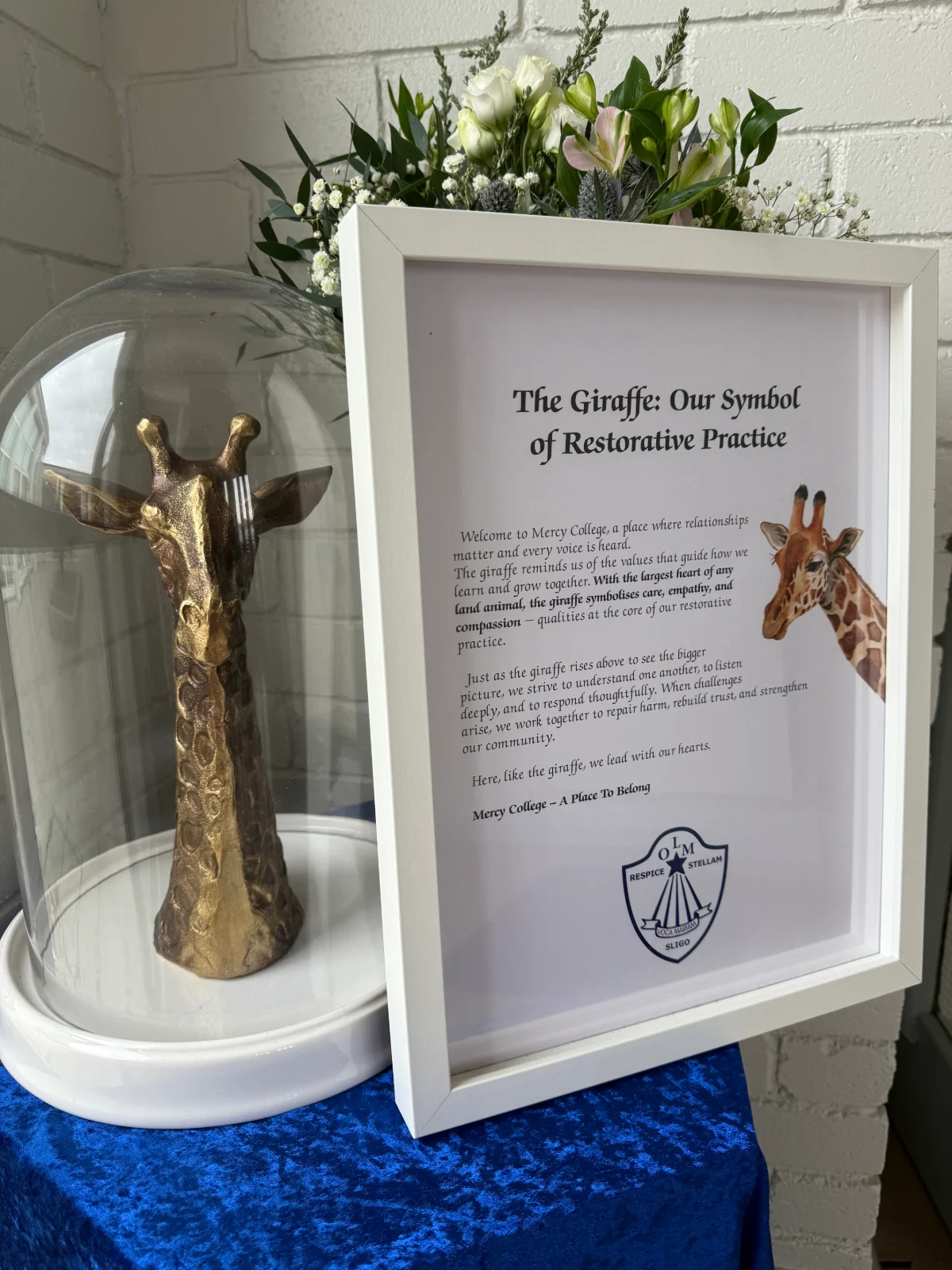
  • Restorative Practice – the behavioural system and approach that is employed in the school
  • Sensory and TLC Room
  • School trips – college open days, abroad, end of year and subject based
  • 1st year and 6th year Wellbeing Days.
  • Study Skills workshops from Studyclix etc. 
  • Prize Giving Ceremony 
  • Assemblies are conducted regularly to reinforce positive behaviour, to reflect on our school ethos, to provide positive feedback to year groups and highlight all the activities which take place for that year group  
  • TY and 6th year graduation nights
  • Year-group retreats – for example, first years go to Knock every year

Structures/Frameworks Used to Promote and Develop Wellbeing

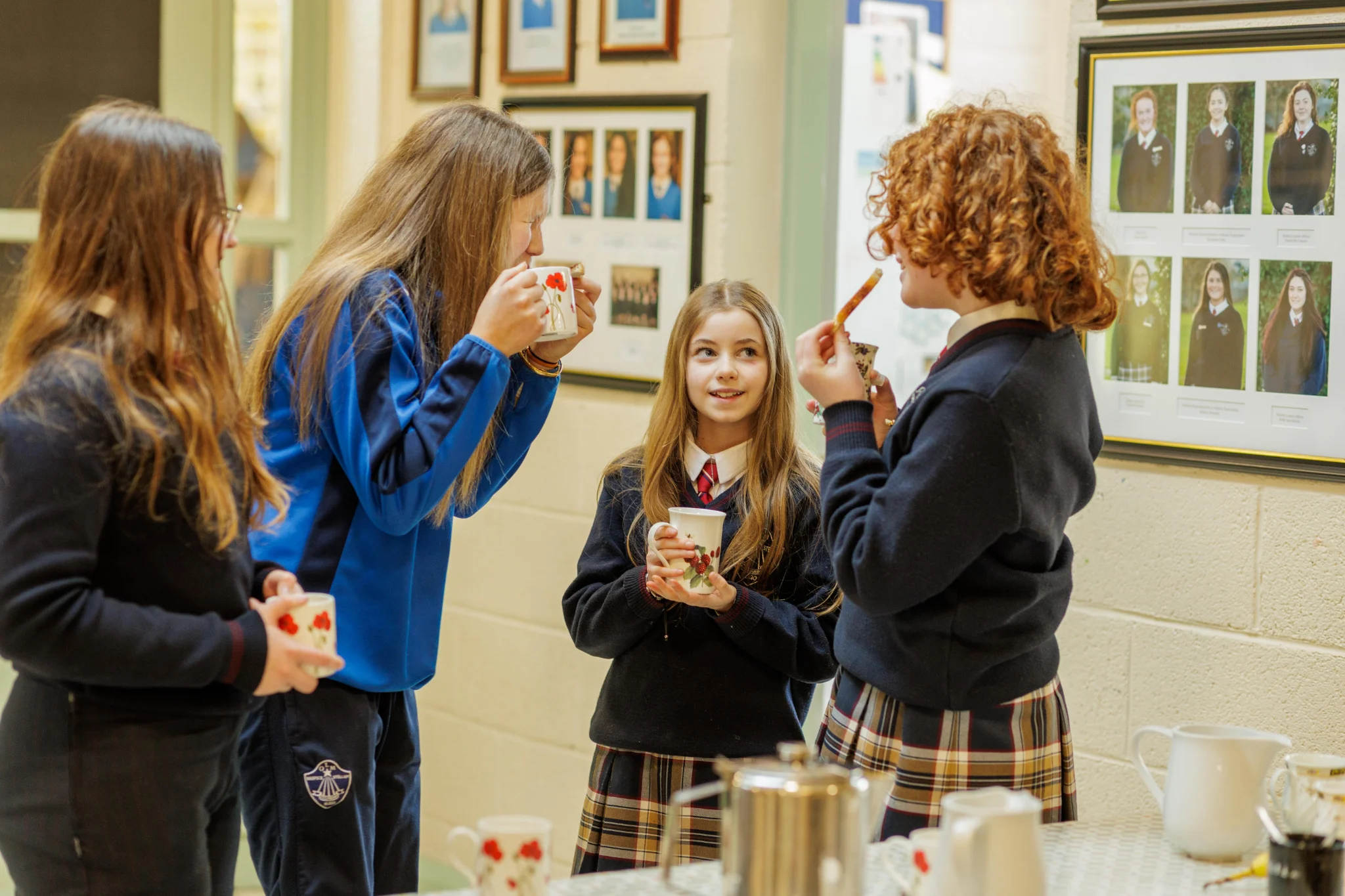
Continuum of Support

In Mercy College, the wellbeing support structures are modelled on the National Educational Psychological (NEPS) Continuum of Support. This enables different levels of support for student wellbeing in accordance with the varying needs of students at different times. All staff involved in the education of students have a role in each stage of the continuum.

(Wellbeing Policy Statement and Framework for Practice, 2019)
School Self-Evaluation (SSE)

Schools were asked to include Wellbeing Promotion as a focus for School Self-Evaluation by 2025 (Circular 56/2022). This is not a separate policy and forms part of schools’ existing School Self-Evaluation Process. The school will use the SSE process to reflect and review how we promote wellbeing in school. The SSE process allows us to examine our strengths and weaknesses in this area and consider areas of improvement. Currently, one of our main whole-school targets is to increase the use of Microsoft Teams to improve student wellbeing – for example, uploading a summary of class content and directed homework on a daily basis. Based on a recent survey, students expressed how this strategy alone has improved their wellbeing and stress levels. 
Wellbeing in Practice: Policy and Planning

In conjunction with the stakeholders; students, parents, teaching staff, SNAs (Special Needs Assistants), school ancillary staff, school management, the board of management and school trustees, Mercy College’s school policies are designed according to the needs of students and the school. 

  • Admission Policy
  • Anti-Bullying Policy
  • Anti-Bullying Charter
  • Attendance Strategy
  • Bí Cinéalta Policy
  • Bí Cinéalta Student Friendly Policy Summary
  • Child Safeguarding Policy
  • Code of Positive Behaviour
  • Data Protection Policy
  • Dignity in the Workplace: Anti-Bullying Policy
  • Dignity in the Workplace: Harassment and Sexual Harassment Policy
  • Global Citizenship Policy
  • Health & Safety Statement 
  • Homework Policy
  • Internet Acceptable Use Policy
  • Intimate Care Policy
  • Pastoral Care Policy
  • Religious Education & Faith Formation
  • Relationships and Sexuality Education (RSE) Policy
  • Student Council Policy
  • Vetting Policy
  • Wellbeing Policy
  • School Mission Statement
  • Whole School Guidance Plan 
  • Social Political and Health Education (SPHE) Subject Plan
  • Civic, Social & Political Education (CSPE) Subject Plan
  • Physical Education (PE) Subject Plan

Wellbeing in Practice: Relationships 

 Student Wellbeing
Student Wellbeing

Through the school’s policies and procedures, the school seeks to provide a safe, caring environment for all. The school recognises the importance of addressing all educational needs through the Continuum of Support:

  • Support for All
  • Support for Some
  • Support for Few

As part of student wellness at Junior and Senior Cycle, Mercy College aims to increase a culture of participation in the activities (academic and extra-curricular for all students), particularly those on the margins.
Wellbeing Support for All

The following wellbeing supports are available for all students: 

  • Subject Teachers: The subject teacher is responsible for maintaining a safe environment in which to learn. The subject specific teacher is also responsible for creating a positive classroom environment, monitoring the progress of each student in their care and providing assistance where needed.
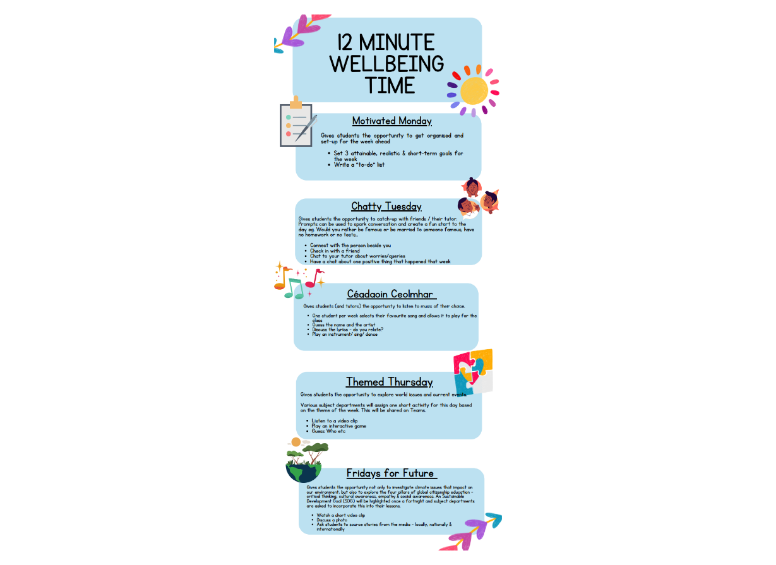
  • Class Tutor: Each class group has a dedicated class tutor. This teacher takes a particular interest in the welfare of all the students in their class. The tutors meet their groups every morning for the “12 Minute Wellbeing Time” which is based on a themed model – Motivated Monday, Chatty Tuesday, Céadaoin Ceolmhar, Themed Thursday, Fridays for Future. See the poster below. This helps the tutors to build a strong and meaningful relationship with their students. They also monitor attendance, contact home if necessary and keep a close eye on each student’s progress within the school community.
Themed Weeks
Themed Weeks

Mercy College celebrates a different theme each week, in line with national and international events, subject weeks and other occasions. This list may differ from year to year.

  • European Languages Week
  • World Dyslexia Awareness Week
  • Maths, Science, Geography, History, Music, Art, Technology, Business Studies Week
  • Stand-Up Awareness Week
  • Kindness Week
  • Catholic Schools Week
  • Anti-Bullying Week
  • DEAR (Drop Everything and Read) Week
  • College Awareness Week
  • Global Recycling Week
  • Seachtain na Gaeilge
  • World Home Economics Day
  • Active Schools Week

Extra-curricular Activities

A vast range of extra-curricular activities aim to enhance the wellbeing of all students. The school has a number of wellbeing celebrations, initiatives and facilities which serve to enhance relationships and create a strong culture of wellbeing in the school. 

  • Year Head: The Year Head has overall responsibility for a year group while maintaining a secure, healthy, orderly and disciplined learning environment in a manner that demonstrates equality, fairness and justice, (to include liaising with parents and mentoring students). Year Heads will work closely with Class Tutors to ensure the wellbeing of the students in their care.
  • Whole School Wellbeing Hours: Junior Cycle students get 400 timetabled hours of Wellbeing. This includes 135 hours PE, 100 hours CSPE, 100 hours SPHE and 12 minutes of Wellbeing Time each morning.
  • SPHE Programme: All Junior & Senior Cycle students participate in timetabled SPHE classes. The content of these classes particularly pertains to student wellbeing. This is explained in detail in the SPHE subject plans. 
  • CSPE Programme: All Junior Cycle students participate in timetabled CSPE classes from first to third year. The content of these classes particularly pertains to student wellbeing. This is explained in detail in the CSPE subject plans.
  • Career Guidance: Senior Cycle Students have weekly Career Guidance classes and Junior students cover career focused content in SPHE. 
  • Wellbeing Coordinator: The Wellbeing Coordinator Promotes and facilitates activities related to student wellbeing.
  • Student Council Facilitator: The Student Council Facilitator promotes and facilitate student voice in school activities through the Student Council meetings and other activities. 
  • School Chaplin: The school chaplaincy service is available for all students. 
  • Physical Education (PE)
  • FUSE – an anti-bullying and on-line safety programme developed by DCU Anti-Bullying Centre and supported by the department of Education
  • Cinneáltas: Action Plan on Bullying provides a collective vision and clear roadmap for how the whole education community and society can work together to prevent and address bullying in our schools.
  • Belonging Plus – this programme supports students in the transition from primary school to first year. It helps them build friendships and feel more comfortable in their new environment. Students learn about the school layout, meet teachers, and gain practical skills such as how to use a locker and journal effectively.
Wellbeing Support for Some

The following extra wellbeing supports are available for students as required:

  • Guidance Councillors: guidance counsellors offer an opportunity for students to attend individual counselling/guidance sessions as required. This is detailed in the Whole School Guidance Plan. 
  • AEN Support: The Additional Educational Needs (AEN) coordinators and department provide support for students with AEN in the school. That is managing the planning and provision of the AEN programme while fostering a commitment to inclusion, equality of opportunity and holistic development of each student.  
  • Special Needs Assistants (SNAs) provide assistance and support to students with additional educational needs. 
  • Deputy Principals: The two Deputy Principals have overall responsibility for Junior, Transition Year and Senior Cycle while maintaining a secure, healthy, orderly and disciplined learning environment in a manner that demonstrates equality, fairness and justice. They liaise closely with the year heads and will work with them as required to ensure the welfare of students in the school. 
  • TY Mentors: TY students support, encourage and help first year students, particularly beginning their first few weeks in school and school sports and other whole school activities. 
  • 6th Year Prefects: 6th year prefects act as role models, helping to support younger students and promote a positive school environment. They also assist staff with school events and represent the student body, encouraging respect, responsibility, and leadership.
Wellbeing Support for Few

The following extra wellbeing supports are available for students as required: 

  • Pastoral Care Team: The Mercy College pastoral care team continues to meet weekly at a set time to discuss pastoral issues and needs of students. The team includes the school Principal, Deputy Principals, guidance councillors and year heads.
  • Critical Incident Plan and Protocols: In the eventuality of a critical incident involving the school community, Mercy College will adhere to its Critical Incident Plan. 
  • Child Protection: Mercy College acknowledges that child protection and welfare considerations permeate all aspects of school life and must be reflected in all of the school’s policies, procedures, practices and activities. Through the schools Child Protection Statement and in its policies, procedures, practices and activities, the school adheres to the principles of best practice in child protection and welfare. All staff have completed the Children First E-Learning Module.  
Student Voice
Student Voice

Listening and responding to feedback and suggestions from students is essential to the wellbeing of the student body. Mercy College places an emphasis on giving space for student voice, and facilitating students to express their views through the following channels:

  • Students Council: The student council is formed from one elected representative from each class group. They meet regularly to express views of the student body as their elected representatives. They are consulted on all amendments to school policies and where appropriate on school plans. 
  • Class Prefects: There is a Prefect and Vice-Prefect elected from each class and they represent the views of their group. They are also Wellbeing Ambassadors for the school and act as peer supporters, helping students feel listened to, connected, and supported in their overall wellbeing.
  • Communication with SNAs, Subject Teachers, Class Tutors, Year Heads, and Deputy Principals.  
  • Formal or informal communication with school Guidance Counsellors.
  • Additional Educational Needs (AEN) Team.
  • Student Surveys: Year groups or the entire student cohort are surveyed using Microsoft Forms on a range of issues to get a flavour of the overall opinion of the student body on a range of issues.

Staff Wellbeing

Staff wellbeing is a vital component in contributing to wellbeing of the entire school community. Mercy College recognises the importance of staff wellbeing and the following events, protocols and procedures are active in the school to support this:

  • The promotion of a safe, comfortable teaching environment
  • An open-door policy whereby staff can discuss issues of concern with the Principal, and/ or Deputy Principals in a confidential manner
  • Staff Wellbeing Committee
  • Wellbeing Coordinator 
  • Regular staff and departmental meetings
  • Continuous Professional Development is provided, encouraged and supported 
  • Subject departments are resourced well and any requests for resources are considered as appropriate
  • Provision of IT equipment for subject planning and delivery
  • Staff have the opportunity to develop their professional and leadership capacity through various initiatives, committees and groups.
  • Droichead process for induction of newly qualitied teachers (NQTs)
  • Mentoring process for student teachers. 
  • Induction process for new teaching staff . 
  • Formal and informal social events for school staff. 
  • Staff-bonding activities – painting classes, yoga, wreath making, jiving classes, mountain climbing etc. 
  • Access and information provided on spectrum life – The Employee Assistance Service.
  • Provision of tea, coffee, biscuits and treats for staff at break time.
  • Staff breakfast provided by the Parents Association at the end of the year.
  • Staff lunch is provided at least twice a year.